
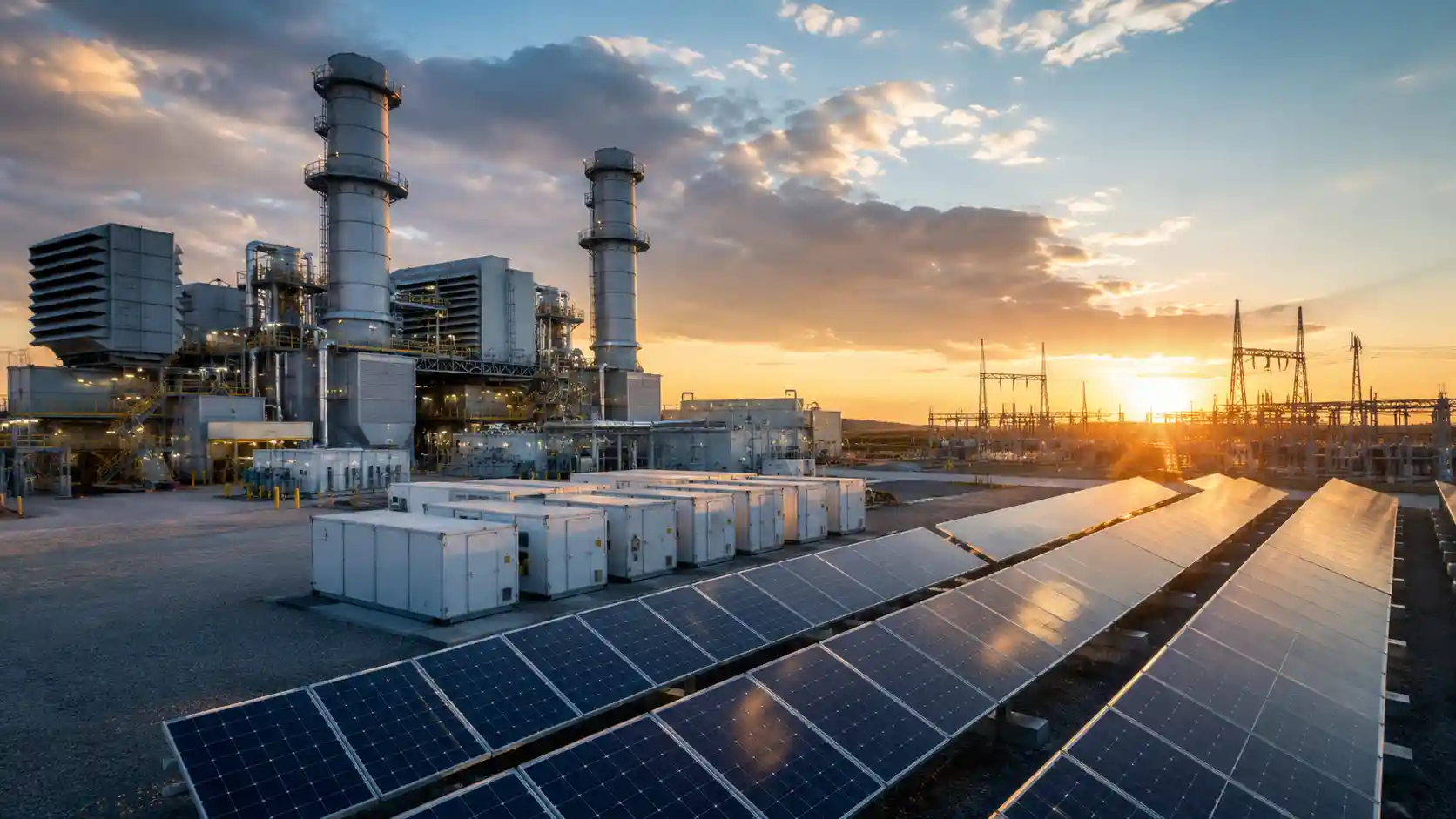
Industrial power planning has changed. Reliability still comes first, but operators are now looking at efficiency, fuel exposure and long-term flexibility too. In that wider conversation, a clear solar panel performance guide helps explain where PV can support a broader energy strategy.
For facilities that already depend on turbines, rotating equipment, backup generation or complex control systems, solar PV is rarely a direct replacement for existing power assets. It is better understood as one more layer in an energy resilience plan.
For industrial sites, the question is not “solar or turbines?” The better question is how different power assets can work together without weakening reliability.
Power Resilience Is Becoming More Complicated
Industrial and energy-sector facilities have always cared about uptime. A power interruption can affect production, safety, communications, refrigeration, pumping, control systems and contractual obligations. What has changed is the number of pressures that now sit around that reliability requirement.
Operators may need to reduce fuel use, modernize ageing systems, improve monitoring, manage emissions expectations, control operating costs and prepare for future electrification. Solar PV can play a role in that conversation, but only when it is designed around the realities of the site.
Reliability still sets the rules
A manufacturing plant, offshore support facility, data-driven operation or remote industrial site cannot treat power as an experiment. Any renewable addition must be evaluated against uptime, safety, controls integration and maintenance requirements.
PV is most useful when its role is specific
Solar may help offset daytime auxiliary loads, support non-critical demand, charge batteries, reduce generator runtime or contribute to site-level energy savings. It is less useful when it is sold as a simple cure for every power problem.
The strongest projects define what solar should do before they define how many panels to install.
Where Solar PV Can Fit in an Industrial Power Strategy
Solar PV produces electricity during daylight hours. That makes it naturally different from turbine-based generation, which can be dispatched when needed if fuel, maintenance and operational conditions are in place. The value of PV depends on matching daytime production to real site demand.
Offsetting daytime electrical loads
Many industrial sites consume significant electricity during working hours. Lighting, ventilation, offices, monitoring equipment, pumps, controls, workshops and auxiliary systems may all create loads that overlap with solar generation.
Reducing generator runtime
In some hybrid systems, solar can reduce the number of hours that a generator or turbine-based system needs to run at low or inefficient load. This is especially interesting where fuel logistics, maintenance intervals or operating costs are major concerns.
Supporting battery storage
When paired with batteries, PV can help charge stored energy during daylight hours. The battery can then support selected loads later, smooth short-term fluctuations or provide backup for critical but limited circuits.
Solar should not be overpromised
PV output changes with sunlight, weather, shading, temperature and equipment condition. Industrial planning should treat it as a valuable but variable source, not as a guaranteed replacement for dispatchable generation.
The Role of Turbines Does Not Disappear
Gas turbines, power turbines and other rotating assets continue to matter where high reliability, fast response, established infrastructure and large power demand are involved. In many facilities, these assets remain central to operational continuity.
What may change is how often they run, which loads they support and how they interact with newer energy assets. Solar, batteries and controls can influence the operating profile of a site, but turbine readiness and maintenance discipline remain essential.
A turbine that runs fewer hours still has to be ready when called. Reduced runtime does not remove the need for inspection, controls support and maintenance planning.
Maintenance planning becomes more strategic
Hybrid energy systems can change how equipment is used. If a turbine runs less often but remains critical for backup or peak demand, maintenance planning should reflect that duty cycle. Long idle periods, start-stop behavior and control system reliability may become more important.
Controls integration is the real test
Adding solar or storage to a site is not only an equipment decision. The control strategy has to make sense. Operators need to know which asset supplies which load, how transitions are handled and what happens during faults or outages.
Why Controls and Monitoring Deserve Early Attention
Energy resilience depends on visibility. A site with turbines, grid supply, solar PV, batteries and backup systems needs more than individual equipment dashboards. It needs a practical understanding of how the whole power system behaves.
What operators should be able to see
- Real-time solar production
- Battery state of charge and discharge patterns
- Turbine or generator operating status
- Load demand by priority or area
- Grid import and export, where applicable
- Faults, alarms and abnormal performance
- Maintenance indicators for critical assets
Older systems need a practical upgrade path
Many industrial sites operate equipment that was not originally designed for modern hybrid energy management. In those cases, controls renovation, interface upgrades and careful commissioning may be just as important as the new generation equipment.
Solar Panel Selection for Industrial Sites
Industrial PV projects should not be specified only by price per watt. Panel efficiency, durability, warranty terms, degradation rate, temperature behavior and compatibility with the system design all matter.
Roof-mounted systems
Warehouses, workshops and service buildings may offer useful roof space, but structural condition, roof age, penetrations, walkways, skylights, HVAC units and safety access must be considered before design is finalized.
Ground-mounted systems
Sites with available land may have more flexibility. Ground-mounted arrays can make maintenance easier and allow better orientation, but they also require land allocation, foundations, cable routing, security and environmental review.
Harsh environments
Industrial sites may expose solar equipment to dust, salt, wind, vibration, chemical atmosphere or high heat. The module, mounting structure, cabling and enclosures should be selected for the actual environment rather than a generic clean rooftop scenario.
Storage Changes the Value of Solar
Solar without storage is most valuable when the site can consume the energy during daylight hours. Solar with storage can support a wider range of goals, including evening load support, short-duration backup and smoother use of renewable generation.
Where batteries can help
- Reducing peak demand from the grid
- Supporting selected critical loads
- Improving use of daytime solar production
- Reducing generator runtime at light load
- Providing short bridging power during asset transitions
Battery sizing should be conservative
Industrial loads can be large and unpredictable. A battery should be sized around specific supported loads and backup duration, not around vague claims of “whole-site resilience.”
Decommissioning and Upgrade Planning
Many power sites are not built from scratch. They evolve over decades. Equipment is added, renovated, refurbished, replaced and sometimes decommissioned. Solar PV and storage should be planned with that lifecycle in mind.
Before adding new energy assets, operators should review existing electrical infrastructure, obsolete equipment, available switchgear capacity, controls limitations, cable routes and future site plans.
Questions before adding PV to an existing power site
- Which existing assets must remain critical?
- Which loads can solar realistically offset?
- Is the electrical infrastructure ready for new generation?
- Will controls need renovation or integration work?
- Can the system be isolated safely for maintenance?
- How will performance be monitored?
- What happens during grid loss, equipment fault or low solar output?
- Does the site need storage now or only future-ready design?
Hybrid energy planning works best when old and new assets are treated as one operating system, not separate projects.
Procurement Should Look Beyond Installed Cost
Lowest installed cost is not always the best metric for industrial energy projects. A weak design can create maintenance issues, downtime risk, poor monitoring and expensive retrofits. A more complete procurement process looks at lifecycle value.
What to compare in proposals
- Expected annual generation under site conditions
- Impact on turbine or generator operating hours
- Controls and monitoring approach
- Maintenance access and service requirements
- Warranty terms for PV, inverter and battery equipment
- Compatibility with existing power infrastructure
- Expansion or retrofit options
- Responsibility for troubleshooting and support
A proposal that only lists capacity and price is usually not enough for a serious industrial site.
Final Thoughts
Solar PV can be a useful part of industrial energy resilience, but it should be added with a clear role. For sites that rely on turbines, controls, rotating equipment and backup power assets, solar is best viewed as a supporting layer in a broader power strategy.
The strongest results come from matching PV generation to real loads, maintaining dispatchable assets properly, integrating controls carefully and planning for storage where it adds genuine value. Industrial energy resilience is not built from one technology alone. It is built from well-managed assets that work together when the site needs them most.

